In Tasmania, drivers must complete several steps to obtain a learner’s permit and eventually earn a full driver’s license. Each step is subject to rules and restrictions. This blog offers a thorough overview that covers the fundamental rules and specifications for provisional and learner drivers in Tasmania.
Learners and P-plates rules and restrictions in Tasmania
Learner License (L)
Rule:
In Tasmania, drivers can take the Driver Knowledge Test (DKT) and begin the process of obtaining a license once they reach the minimum age of 17. You have two options for taking the DKT: scheduling a test at Service Tasmania or doing it online through the Plates Plus course. People receive a Tasmanian learner’s license after passing the driver’s knowledge exam.
Restrictions:
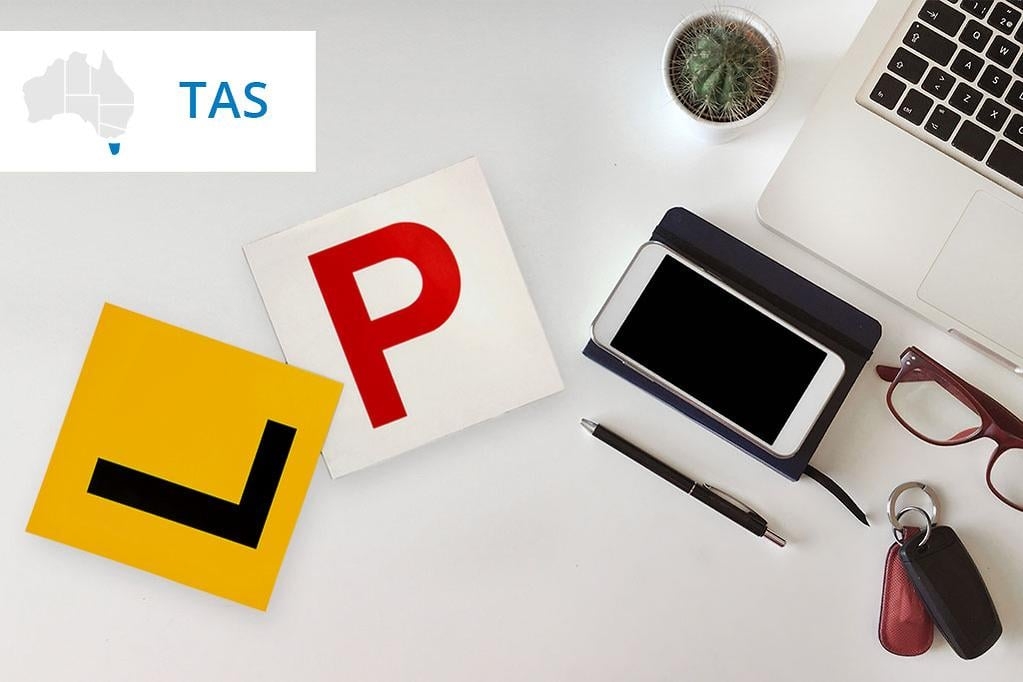
L-plates must be clearly visible on the front and back of learner drivers’ vehicles.
A fully licensed driver with at least 12 months of continuous driving experience must be watching the learner driver.
Learner drivers may drive only up to 90 km/h, even when the posted speed limit is higher.
A learner driver must have no alcohol in their system, or a BAC of 0.00.
They must not use cell phones while driving under any circumstances.
They are also not allowed to tow any vehicle, including trailers.
According to Carsales, a license suspension may result from receiving four or more demerit points in a 12-month period.
P1 Provisional License (Red P)
Rules:
The learner driver must be at least 17 years old, have accrued the required number of logbook hours, and have held the learner’s license for at least 12 months in order to transition to a P1 provisional license. To obtain a P1 license, drivers must pass a practical driving exam, which they can schedule with an official testing officer. The test evaluates several aspects of the driver’s abilities and their capacity to handle real driving situations safely.
Restrictions:
P1 drivers are not allowed to go faster than 100 km/h, regardless of the posted speed limit. Even on routes with greater speed limits, they are therefore unable to travel more than 100 km/h.
Drivers are prohibited from using mobile phones while driving, and they must not consume any alcohol.
P1 license holders, with few exceptions, must not drive with more than one peer passenger aged between 16 and 21.
Drivers must always carry their P1 license while driving.
License limits vary depending on whether the driver used a manual or automatic car for the practical test.
A license suspension may result from accruing four or more demerit points in a 12-month period.
P2 Provisional License (Green P)
Rules:
Drivers automatically receive a P2 license after holding a P1 license for 12 consecutive months without any repeat infractions, disqualifications, or suspensions. They do not need a separate license card for this transition, as the license automatically renews if it remains valid.
Restrictions:
Green P-plates should be clearly visible on both the front and rear of their vehicle, as well as on the back of any trailer they are towing.
Drivers must maintain a blood alcohol content (BAC) of zero, meaning they are not allowed to drink before driving.
P2 license holders may tow a trailer, but they must clearly display the Green P plates on both the car and the trailer.
Drivers must always carry their P2 license while driving.
P2 license holders can follow the same speed and cell phone regulations as full license holders and are not subject to peer passenger limits. However, they still risk suspension if they accrue four or more demerit points in a 12-month period or less.